
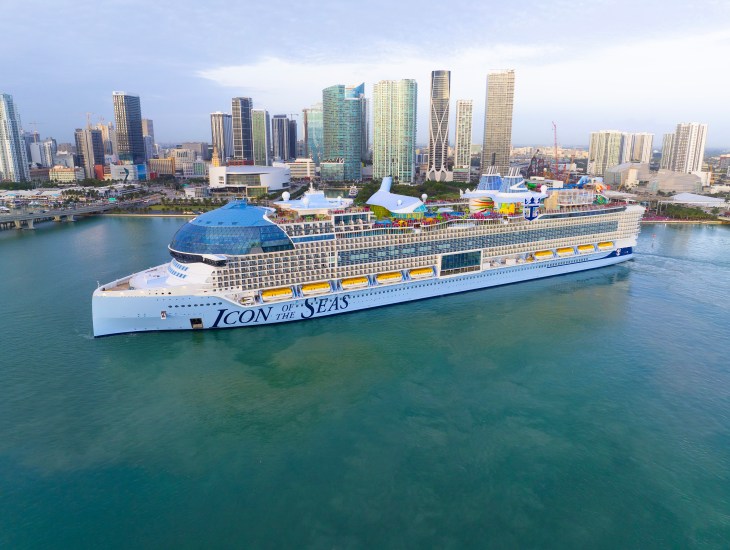

Icon of the Seas – the world’s largest cruise ship – has certainly made a big impression. It’s also stirred up a wave of criticism for using liquefied natural gas, which environmentalists claim can cause ‘methane slip’, potentially leaking harmful greenhouse gases into the atmosphere.
LNG was hailed as a major step forward on the road to net-zero emissions, which the cruise industry has pledged to reach by 2050, because it cuts carbon dioxide output by 20 per cent and almost eliminates sulphur dioxide, nitric oxide and particulates from exhaust gases.
However, since Icon set sail on its maiden voyage from Miami, environmentalists have highlighted the risk of escaping methane, which is a more potent greenhouse gas than CO2.
Royal Caribbean stresses that LNG is a transitional fuel. A spokesperson told me: ‘Every day we are working with the best minds to advance our journey to net-zero. LNG is one part of our decarbonisation strategy, which also includes biofuels, methanol and other energy sources like shore power and fuel cells.
A BBC News report in which I gave my views on Icon of the Seas (Video: BBC)
‘There is currently no silver bullet to reach our net-zero target which is why we are diversifying our portfolio of energy sources by working with the best partners to accelerate the technology needed for maritime use.’
The cruise line also emphasises the other environmental aspects of Icon, which is 24 per cent more energy efficient than required, processes all waste while creating power, and produces 93 per cent of fresh water on board.
Here’s what CLIA, the cruise industry body, told me about the latest argument surrounding LNG:
- Current technology is capturing methane more effectively than previously and methane slip is on a path to be eradicated within the next few years;
- While LNG is the cleanest burning fossil fuel available today at scale, there are many other pathways to net-zero emissions. The cruise industry is investing billions of pounds in pursuing the most viable;
- The answer is not the fuel being used today – the answer is the engines that will allow for the use of zero-carbon fuels in the future;
- Cruise lines are building the future of sustainable travel into their ships.
Future fuels that could replace or augment LNG include green methanol, renewable biofuels, hydrogen fuel cells, photovoltaic/solar, battery storage and wind.
Many trials are taking place to find alternative sustainable marine fuels on the path to net-zero emissions.
Everyone agrees that the future of cruising is greener fuels. The challenge is how to produce them safely and at scale for ships that travel all around the world.
See also: