


Guest post by Anne and Rob England
What’s the position on repositioning cruises? Well, as ever when it comes to holidays on the high seas, it’s very much down to individual experience and preference. But while such cruises can be good value, it’s important to think carefully about what’s on offer before you decide, because they can be very different from the usual type of cruise.
A repositioning cruise happens when a ship is switching to a new home port (usually for the next season); cruise lines sell these journeys because they need to operate all year round, rather than have their ships languish expensively in port for the winter.
Repositioning often – although not always – involves a longer ocean crossing. This brings a few factors into play that might not have such an impact on a shorter round trip. One is that you might visit some ports of call at the tail end of the season, when businesses are winding down for the winter. Another is that you can be more exposed to the whims of the weather (although this can, of course, be an issue at any time on the open sea). And yet another factor, possibly more important, is that many repositioning cruises involve an extended series of sea days.
For some passengers, a number of sea days in a row can be quite relaxing: you can make the most of the on-board facilities, activities and entertainment and establish a pleasant daily routine uninterrupted by the busy-ness of getting into your next port of call. For other travellers, more than one or two days at sea can feel like a luxurious form of house arrest.
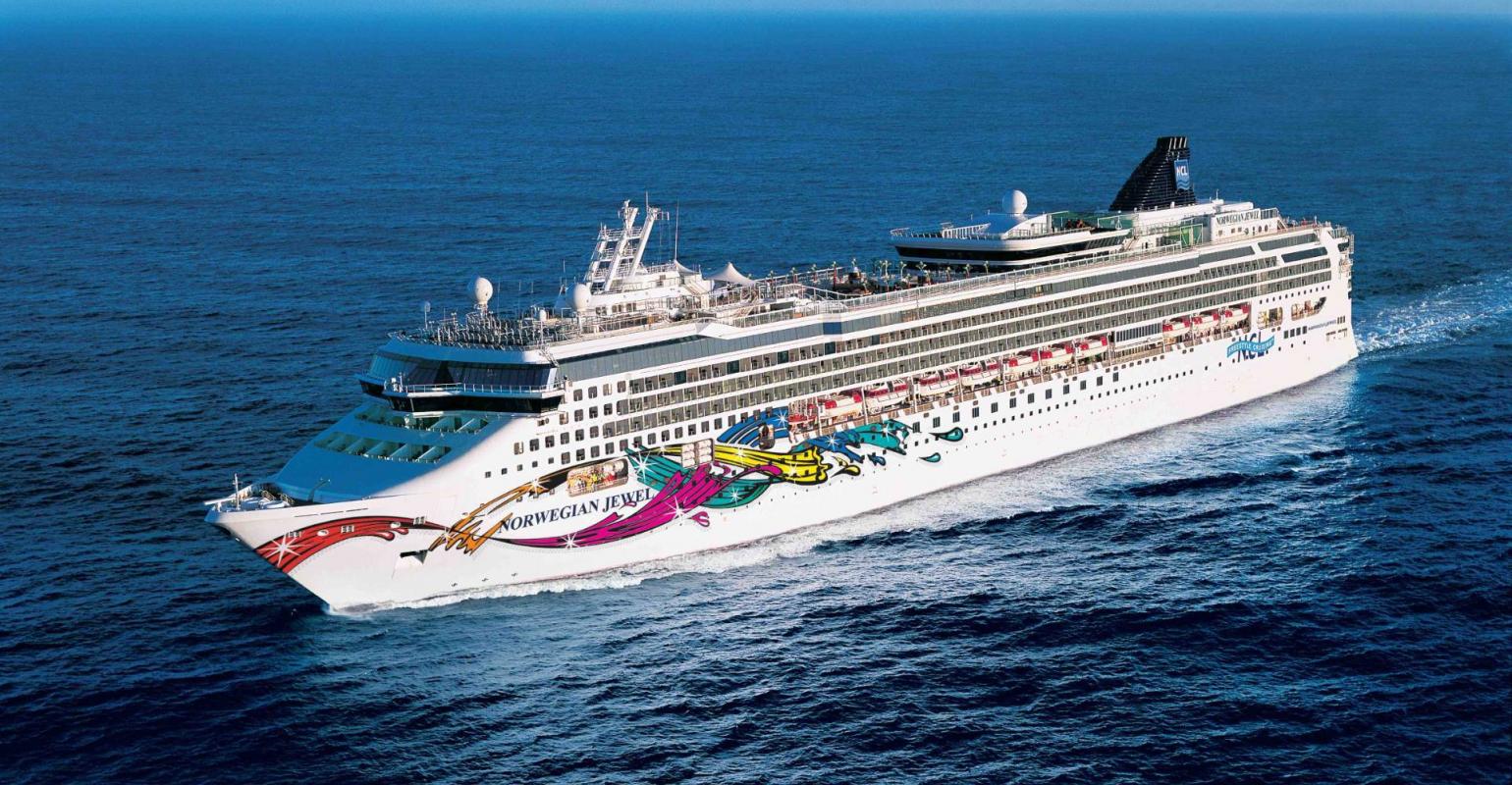
Our October repositioning cruise, on the Norwegian Jewel, went from Seattle to Tokyo, with three stops in Alaska and two in Japan on the way. The season, and the potential temperature range, had us obsessively checking weather forecasts in the weeks running up to the trip so that we could decide what to pack. In the end, fleeces, waterproof jackets, gloves, T-shirts and shorts all came into use!
We already knew and accepted in advance that the ocean crossing from North America to Japan – originally taking in the Bering Sea – would mean six sea days in a row. Accordingly we planned a relaxed daily routine: some exercise in the pool or on the promenade deck; a daily quiz; some reading in our stateroom or a film in the theatre, which doubled as a cinema on sea days.

Norwegian Jewel is a fine ship on which to spend time. She has a capacity for almost 2,400 passengers, but there were only 1,800 on this trip – 1,600 of them Americans, and just 49 Brits. In our experience even big ships rarely feel overcrowded, but on this occasion it was nice to have the extra space and plenty of attention from the always excellent staff.
The main dining rooms offered very good food, but we also enjoyed some superb speciality restaurants serving everything from steak and Asian dishes to lobster and Brazilian churrascaria. And with entertainment ranging from stand-up comedy and musical shows to magic and circus acts, it was impossible to be bored on sea days – although the cast only performed one major show, as they were using the repositioning time to rehearse for the new season.
The first sign of trouble was when our captain announced that we wouldn’t be sailing the Bering Sea because of adverse weather conditions, but we would be on schedule if we maintained a speed of around 21 knots. Twenty-four hours later, we had only averaged 18 knots. So, even then, there were rumblings on the passenger grapevine that our two stops in Japan were in jeopardy.
Enter Typhoon Bolaven.
This extremely powerful tropical cyclone – along with Mawar, the strongest in the world in 2023 – battered its way up to our part of the North Pacific from Micronesia in early October. And, of course, passenger safety being the primary concern, the ship’s crew had to take evasive action. This involved a huge south-eastwards loop that brought us closer to Hawaii than Japan and the early misgivings were justified by the news of the cancellation of our stops in Hakodate and Sendai.
It seemed at that point that, for many of the guests, the Japan experience would be limited to a taxi ride from the port in Tokyo to the airport. However, the captain’s announcement that we would be arriving in Tokyo a day early and spending the night in port was met with happy cheers. Even with a protracted passport control check in the terminal building, it was still a bonus for many people.
Bolaven’s destructive passage extended our six sea days to eight. In fact, technically nine, if you count the day we lost crossing the international dateline (we’ll never get October 12th back). And despite the manoeuvres to avoid the typhoon, we had some pretty rough seas and high winds that meant a few deck and pool closures.
So by the time we sailed into Tokyo, we couldn’t get on dry land fast enough. And, if truth be told, we weren’t entirely sure we’d want to experience even six days back to back at sea again. Turns out we need the variety of more frequent port visits.
If all this sounds like complaining, it isn’t. Most experienced cruise passengers know that there’s always potential for disruption to the itinerary, often thanks to the weather, so you swallow the small disappointments and enjoy what you do experience all the more. And what experiences we had…
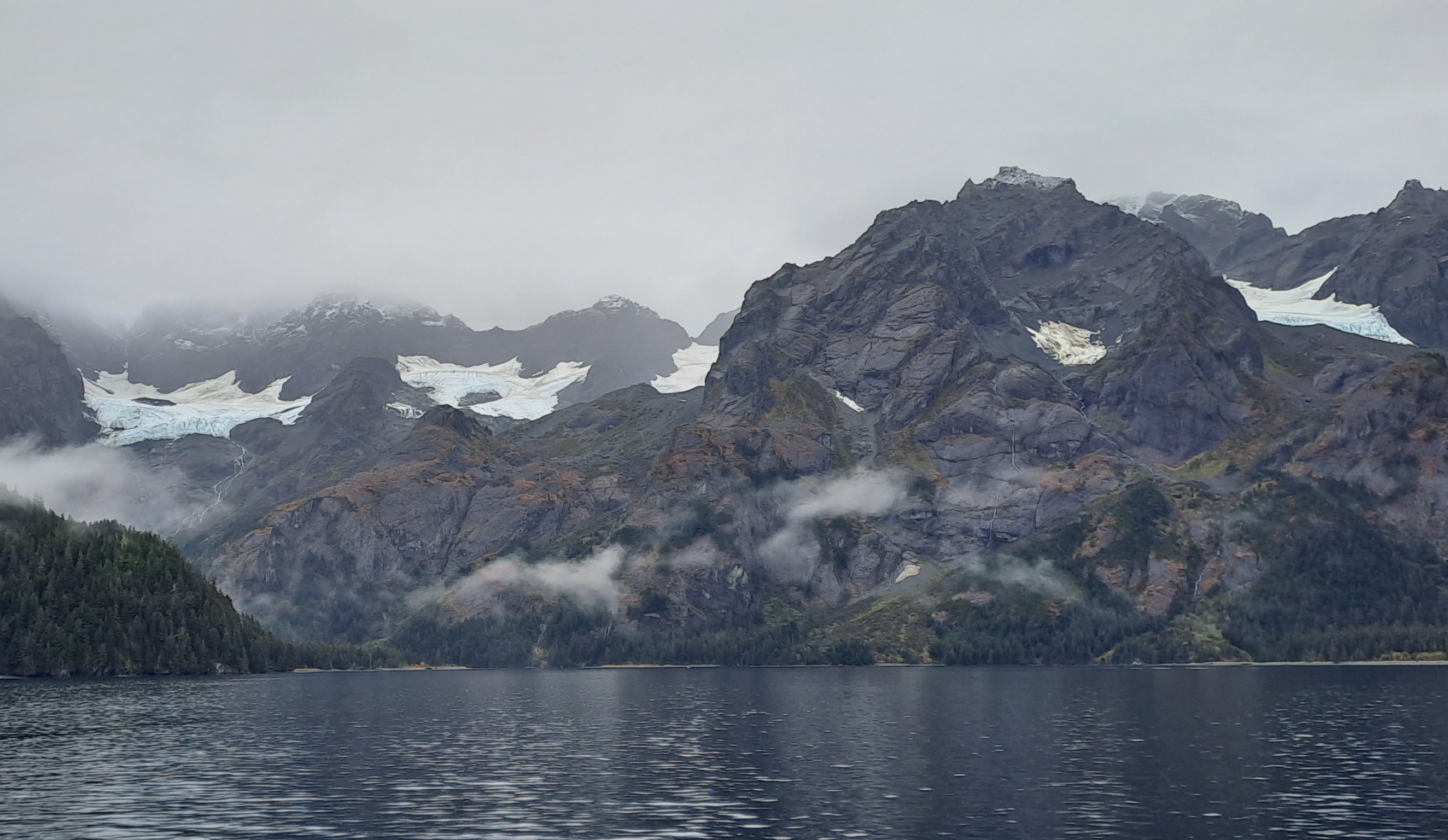
Alaska gave us amazing landscapes, with glaciers, mountains and deep forests. It gave us sea otters playing in the bays, bald eagles so plentiful that it seemed one perched on every tree, building or lamp post, and the extraordinary sight of spawning salmon in such numbers that the river was black with them and the shallows and creek edges were littered with their corpses, for they die soon after breeding.
Despite our best efforts, we didn’t see any whales here (only at a distance from the ship); like the Norwegian Jewel, they were heading for warmer climes. The towns we visited were rugged and unpretentious, reminding us that these are the homes of people, many of them indigenous, living off the land and sea on the edge of a vast wilderness.
Tokyo was a revelation. A city of 37.5 million people, so enormous that even from the 332.9-metre height of the Tokyo Tower you could not see its edges, it is a beguiling mix of new and old, from the glittering high-rise buildings and the extraordinary bustle of the Shibuya scramble crossing to the tea houses in the beautiful parks and the peaceful temples and shrines.
We’ve never seen a cleaner place, nor met such courteous and polite people. On an excursion from the city, we gazed awe-struck at Mount Fuji, drank snow meltwater that’s reputed to take ten years off your looks, and sat back in spacious luxury as the shinkansen (bullet train) whisked us back at around 200mph. And in Yokohama, on the delightful waterfront, we watched brightly clad children and adults perform in a yosakoi dance competition.
So is a repositioning cruise worth a try? Yes, because a longer, one-way journey (ours was 4,000 miles in the end) can offer a greater variety of cultures, landscapes – and, yes, weather! – than a shorter round trip. It can also be good value. And it helps if you’re the sort of person for whom the cruise, as much as the destinations, is the object.
Just be prepared for those sea days!
Other articles by Anne and Rob:
Guest blog: What did two Britons make of a French-style cruise on a Portuguese river?
Guest blog: It didn’t Costa lot but our cheap Med cruise came at a price…